How we work
How We Make a Commercial
We make premium commercials with generative AI the way a production company makes a film: the idea, script, cast and world are approved first, then shots are generated and checked one at a time, reviewed by someone who did not make them, mixed, graded and delivered. You approve the work at six points along the way.
Why the Process Looks Like This
Generative models are good at making a striking single frame. They are unreliable at keeping the same face, the same jacket and the same street across thirty shots, and they add things nobody asked for, such as stray words on a sign or a line of dialogue the script never had. Most of what separates a premium film from a clever experiment is how a studio plans for those faults.
So we spend the first days on the decisions that are cheap to change, from the idea through to the cast and the world. By the time we generate a shot, everything the shot depends on has been designed, approved and pinned to a reference image.
The Stages
- 01
1. Brief and truths
You send the product, the one claim you are allowed to make, the audience, where the film runs and anything mandatory. We come back the same day with a short read of the audience and the category: what is true for the people you want to reach, and what every competitor's ad already does, so we can avoid it.
- 02
2. Routes
We develop several distinct ideas and test them against the brief before you see them, so you choose between strong options rather than variations of one. You usually have them within a day. You pick the route.
- 03
3. Lock and script
The chosen route is fixed in writing, then scripted with picture and sound together and timed to the second. Scripting and a read with fresh readers take about a day. You approve the script.
- 04
4. Cast and world
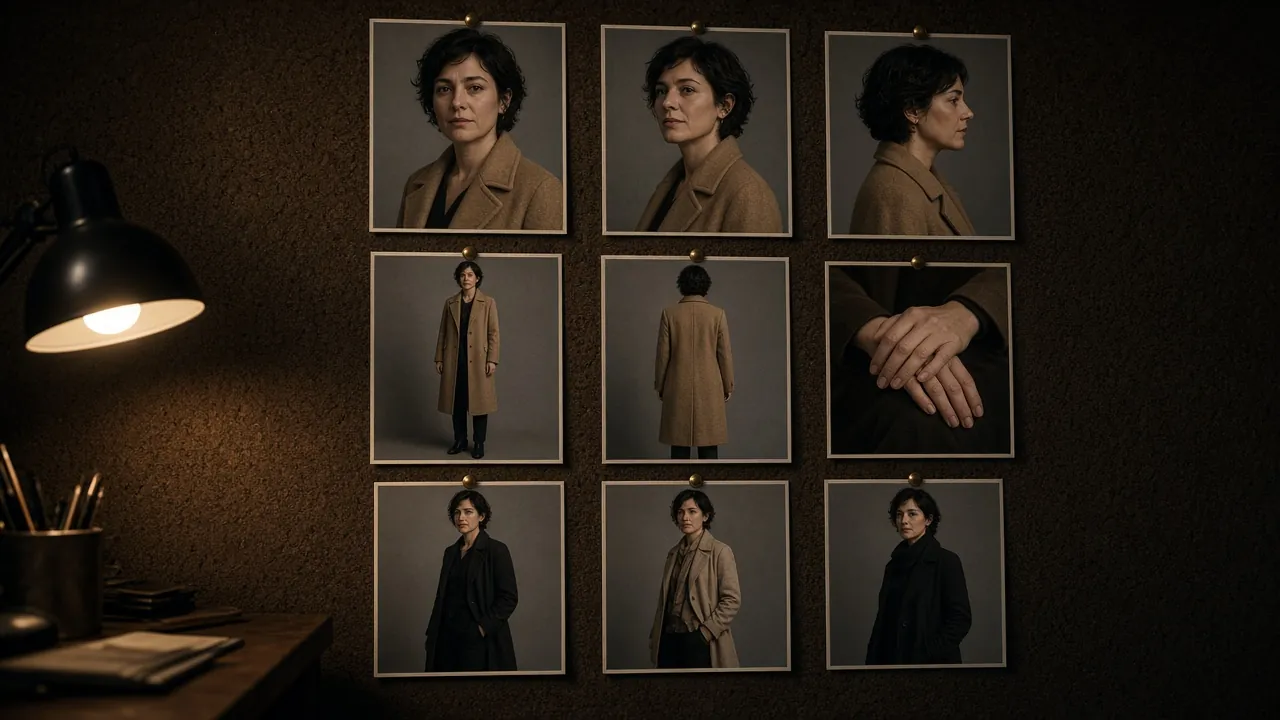
Every character, location and hero prop is designed as pictures: who the people are and what they wear, what the places look like and where the light falls. Design takes about a day. Your product comes from your own packshots and files. You approve the cast and the world before any shot is made, and this is the cheapest point to change your mind.
- 05
5. Shot plan
Every shot is planned for what it has to do in the story, down to its framing and light and whether the camera moves. Once the script is approved, the storyboard is ready in hours. You see it before production starts.
- 06
6. Production, one shot at a time
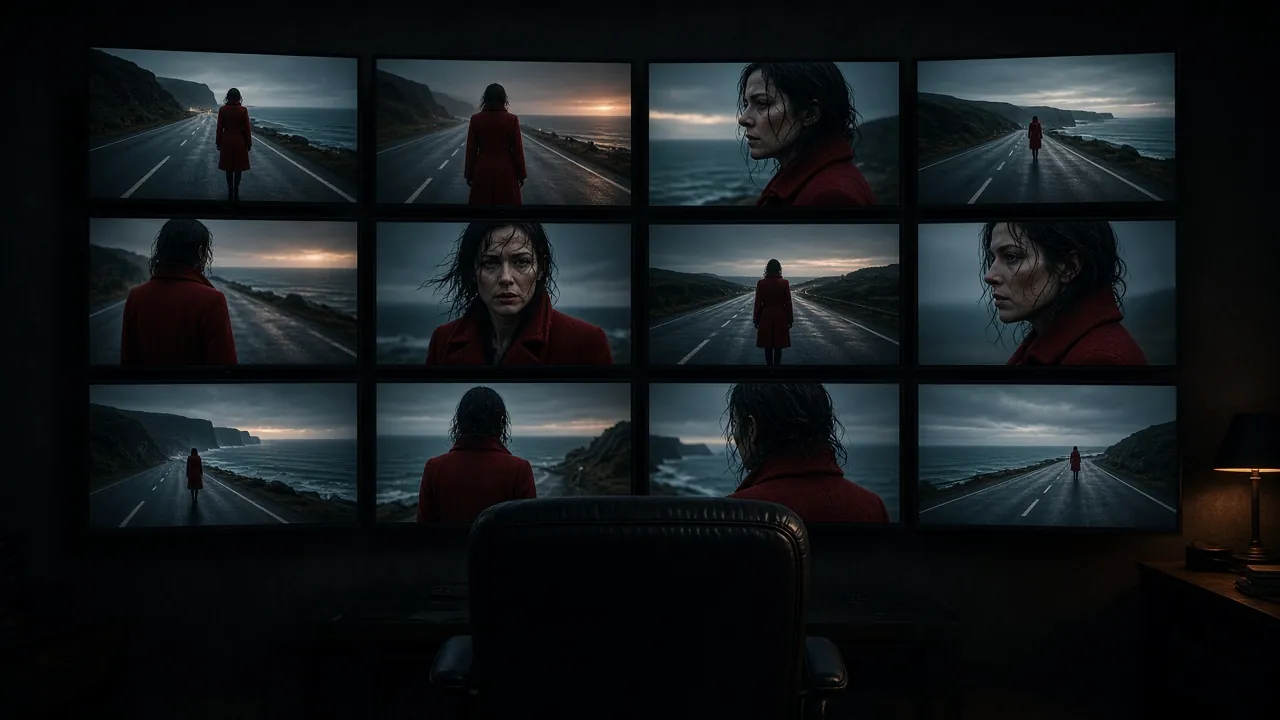
Shots are made and judged one at a time against the approved cast, world and plan, so a problem found early is corrected before it can spread through a scene. A :30 is produced over a couple of days. We assemble a rough cut of the whole film early, so the edit decides which shots deserve the most time.
- 07
7. Review by fresh eyes
Someone who did not make the film watches it cold, looking at story, continuity, performance and sound, including anything a model added that nobody asked for. That watch takes hours. You get the findings ranked by severity, and you choose what we fix.
- 08
8. Sound and finish
Voices, music, effects and the mix, mastered to the loudness your platforms expect. Finish takes about a day. The grade is set scene by scene so shots in the same place match. Logos, type and the end card go on in post from your files, so they are exact. Cutdowns and aspect ratios are built from the approved master.
- 09
9. Delivery and sign-off
You get the masters, the cutdowns, a list of anything still open, and a note of how each shot was made, the day you sign off. We then archive the master and the approved assets and clear the working files.
What You Approve, and When
| Gate | You see | You decide |
|---|---|---|
| Routes | Several written ideas with hook, picture, line and product moment | Which idea we make |
| Script | Timed script with the picture described line by line | Words, tone, where the product sits |
| Cast and world | The designed cast, locations and product | Who is in it and where it happens |
| Shot plan | Shot list and storyboard | Framing and pace before production |
| Rough cut | Every scene assembled, sound roughed in | Which shots to fix or replace |
| Final | Graded, mixed master and cutdowns | Sign-off for delivery |
Why the Films Look Directed, Not Generated
A model will make whatever it is asked for, and it fills every gap in the request with its own guess. The films that look generated are the ones where nobody decided the gaps. Our process gives each decision to the role that would own it on a film set.
- The director decides what each scene is about and blocks it for that meaning: who holds power in the frame, whose face we read the moment through, which single camera move the scene earns. Everything else stays still so the one move counts.
- The cinematographer treats the lens as a point of view, wide to put you inside a space, long to isolate someone in it. Light comes from a source you can believe, a window, a lamp, a low sun, from a side that stays the same across every shot in the scene.
- The acting coach gives each character something to want in every moment, so faces react and think rather than pose. The person listening matters as much as the person speaking.
- The production designer builds each world as a system, with materials that show their age where hands and feet would wear them, so every new location agrees with the last.
- The editor cuts where a thought finishes and makes sure every join between shots is intentional, so nothing reads as an accident.
- The colourist sets one look for the film and holds it, so fifty shots read as one film.
- The producer fixes the scope early and spends on the beats the film is about. When a scene is at risk, the question is which version we can deliver well, rather than how to rescue the expensive one.
How Long It Takes
For a :30 with cutdowns, we deliver in 3 to 7 days when you come back quickly with the brief, the assets and your notes, and sometimes faster. Brief and routes take about a day. Script and design take a day or two. Production takes a couple of days. Sound, finish and versions take about a day. A simpler film, one location and no dialogue, can be sooner. Several speaking characters, crowds or a long list of formats can use the full week. You still approve at each gate. The date follows those approvals. Every quote comes with its own schedule.
Most of that week is the stages before production. That is deliberate. A change to the script costs an afternoon. The same change after thirty shots are made costs those thirty shots.
Live Action, When the Idea Needs It
Some films are fully generated. Some put a filmed product or performer inside a generated world. Some are shot live and finished with generated shots. We pick the method after the idea, and we will say so when a real shoot is the better answer. The comparison is on AI commercial or traditional shoot.
Made Responsibly
Every face and voice in our films is original, created by our team rather than taken from a real person. We never use anyone's likeness without their consent, we tell clients how each shot was made, and we follow the EU AI Act's transparency guidance as best practice. More in the FAQ.
Send Us the Brief
The product, the problem, where it runs and roughly when it needs to air. We come back with a route and a quote.
Start a project