Guide
How a Cinematic AI Commercial Is Made, Shot by Shot
A cinematic AI commercial is made like any premium film: an idea, a script, a designed cast and world, a planned set of shots, a directed performance in each one, an edit, a grade and a mix. What changes is that every shot is generated, so every shot has to be designed, judged and approved with more care than a camera would need.
A guide from the studio.
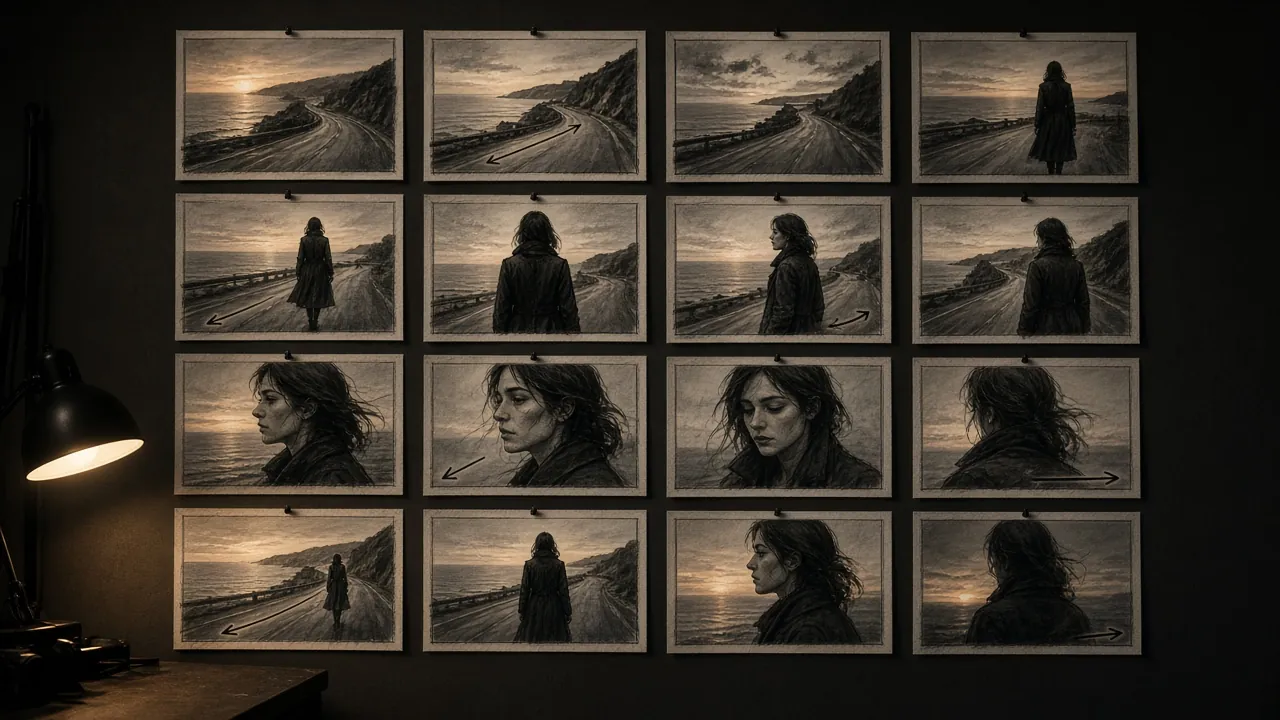
Start With the Problem, Then the Idea
The most expensive mistake in any commercial is a weak idea made beautifully. Before anything is generated, we want to know what the audience already believes, what every competitor's ad already does, and the one thing your product can say that nobody else can. Then we write several different kinds of idea, and judge them as a stranger would, on whether the first three seconds hold attention and whether the idea could only belong to your brand.
Write It to the Second
A :30 has room for a setup, a turn, a rise and a release, and very little else. We time the beats before writing the lines, so the product arrives where it means something rather than where there is space left. The script is written as picture and sound together, because in a generated film the picture is written too.
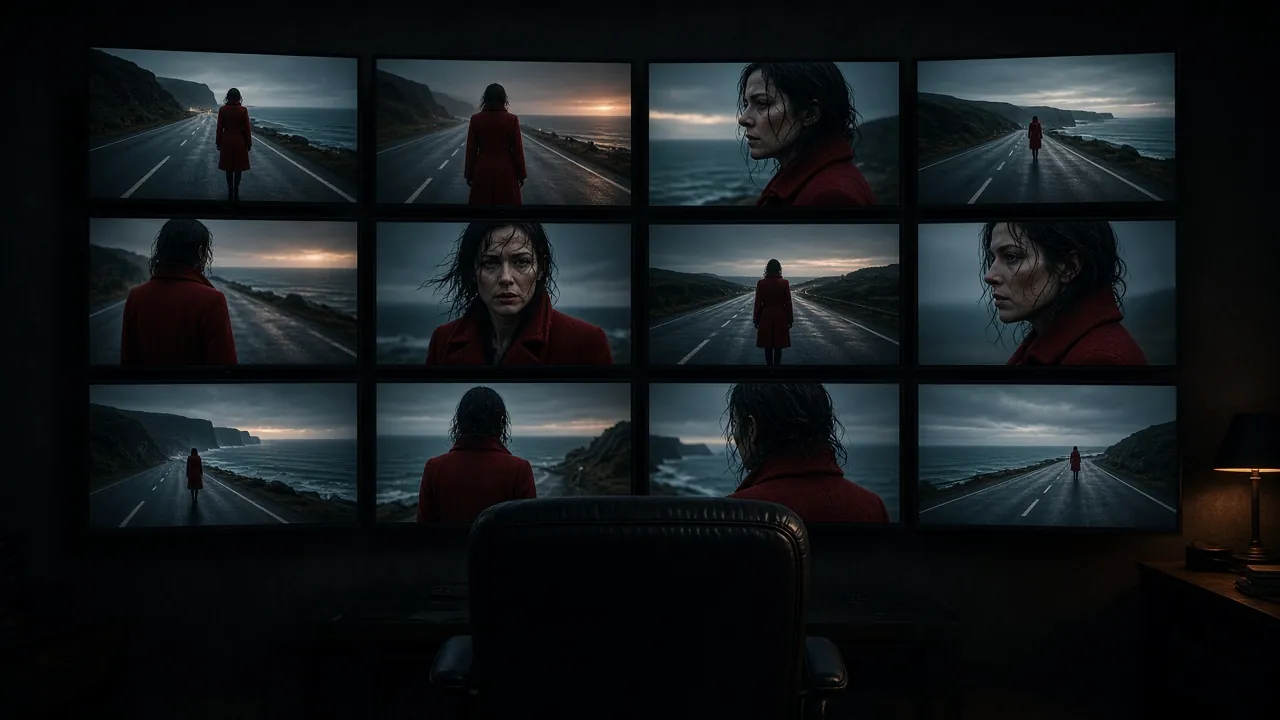
Design the Cast and the World Before Any Shot
On a shoot, the actor turns up looking like themselves every day. In a generated film, nothing turns up the same unless it was designed and fixed first. So the characters, the places and the product are designed as pictures, and you approve them. This is the stage where you shape the film most for the least money. The consistency guide goes deeper.
Plan the Shots Like a Director and a Cinematographer
Each shot is planned for what it has to do in the story: whose face we read the moment through, how big they are in frame, where the light comes from and why, whether the camera moves and what that move means. Films that look generated are usually films where nobody made these decisions and the model made them instead, differently in every shot.
Make One Shot, Judge It, Then the Next
We do not generate a whole film and hope. Each shot is made and judged before the next one is written, so a problem found in the first shot of a scene never reaches the rest of it. Many takes are made for every shot that ends up in the film, and choosing well is a large part of the craft.
The first pass is a rough cut of the whole film. Seeing the film assembled tells us which shots matter and which ones nobody needs, before time goes into polishing any of them.
Review With Fresh Eyes
The people who made a film are the worst judges of it, because they know what each shot was meant to say. Someone who has not seen the script watches the cut cold, and we treat anything they misread as a fault in the film. You see what they found and choose what gets fixed.
Finish It Like a Film
Sound does half the work in any commercial. Voices, music and effects are mixed so dialogue sits on top and the master plays at the level each platform expects. The grade makes every shot in a scene belong to it. Your logo, type and product shots go on from your own files, so they are exact. Then the cutdowns, each edited for its own length rather than trimmed.
How Long a :30 Takes
For a :30 with cutdowns, we deliver in 3 to 7 days when the brief, assets and feedback come back quickly, and sometimes faster. You still approve at each gate. The date follows those approvals. The stages are on how we work.
What to Ask Any Studio Before You Commission
- What do we approve, and when, before production starts?
- How will the same characters and product stay the same across every shot?
- Who reviews the film besides the people who made it?
- How are logos, packaging and on-screen type handled?
- Which parts of the film are human-authored, and what does the contract say about usage?
- Where do you expect this brief to be hard, and what is the plan for those shots?
Our own answers are in how we work and the FAQ.
Send Us the Brief
The product, the problem, where it runs and roughly when it needs to air. We come back with a route and a quote.
Start a project